
August 15, 2026

Yasin Bayram
Construction Expert with 30 years of experience
SPC Flooring User Reviews: An Expert Guide to Benefits and Drawbacks
Read SPC flooring reviews with five practical checks for water, installation, durability, acoustics and care, grounded in Kermit product documents.
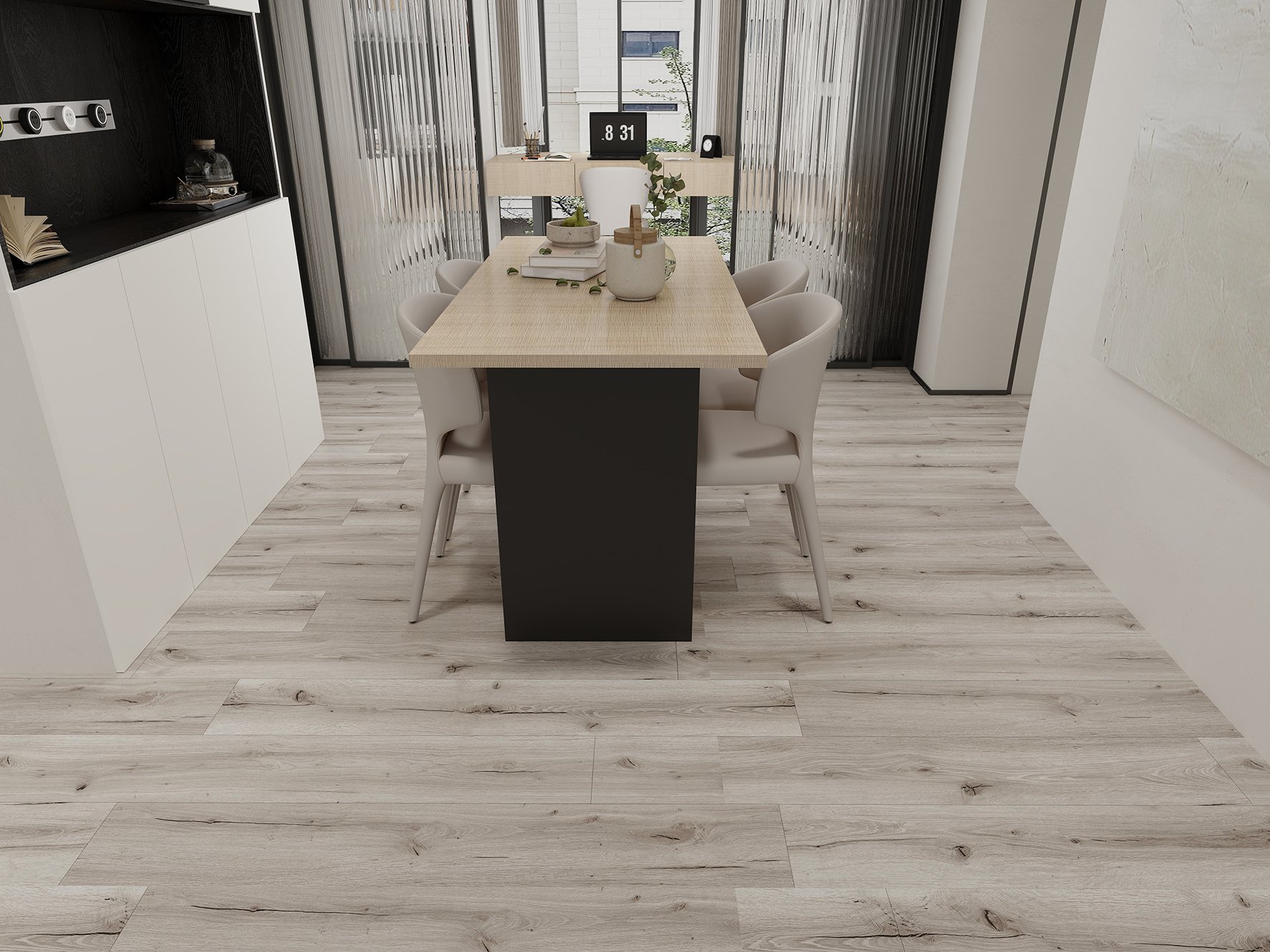
SPC flooring user reviews are most useful when they identify the product, the room and the conditions behind the experience. “Easy to clean” may describe a well-suited kitchen floor; “noisy” may concern sound in one room, transmission to the flat below or a local installation symptom. Those are different questions.
This article is a technical evaluation guide by Yasin Bayram, based on Kermit's published specifications and installation instructions. Use it to examine a sample, read a customer account and decide which evidence you still need before ordering.
1. Water resistance: ask what actually happened
For routine use, look for a clear account of spills, cleaning and room conditions. How quickly was liquid removed? Was it a surface spill or a leak under the floor? Did the reviewer inspect the substrate, or only the visible plank? A photograph of an unchanged surface cannot answer every moisture question.
Kermit's care instructions call for damp cleaning and no standing water. Its flooring guide does not recommend bathroom floors, outdoor areas, hose cleaning or continuously wet conditions. A positive review from a dry living room should not be used to approve a different wet-area application.
The useful benefit is a floor with an appropriate care routine in a suitable room. The limit is that product water resistance does not replace waterproofing or substrate moisture checks. Read the water-resistance guide alongside any broad “waterproof” claim.
2. Installation: separate product handling from the whole job
A reviewer may be pleased with the click connection while omitting several days of preparation. Another may report a difficult joint without naming the locking system, plank condition or tools. Ask what was included in the job and whether the floor was accepted before fitting.
Kermit requires a firm, clean, dry base with unevenness no greater than 2 mm over 1 m. A floating floor needs at least 10 mm around walls and fixed objects, plus a checked transition and movement-joint plan. Those conditions affect the finished result even when the planks themselves connect neatly.
Treat lifting, open joints or noise as symptoms needing assessment. Neither a positive nor a negative review is enough to assign responsibility between product, preparation, installation and exposure. The mistakes guide gives a practical record to collect before attempting repairs.
3. Surface durability: identify the load and the layer
Reviews about pets, chair movement and busy entrances become more useful when the writer identifies the wear layer, surface finish, furniture protection and maintenance. “Thick” does not describe all of those properties, and “commercial” is not a promise that any use is acceptable.
A documented Kermit example is the 6.00 mm overall / 0.50 mm wear-layer / no-IXPE configuration. The wear layer and the total thickness are different fields. Neither should be translated into a scratch-proof, stain-proof or lifetime guarantee. The applicable product sheet and warranty terms are the place to check a specific claim.
Examine a physical sample for the appearance and texture you want, and ask how visible damage would be assessed. A small sample is useful for visual decisions; it is not a substitute for a wear or impact test. Keep decor and batch references and agree whether usable spare planks should be retained.
4. Comfort and acoustics: describe the comparison
Ask what floor the reviewer used before, what was installed underneath and which sound they mean. A personal impression of warmth or firmness can help you decide what to try in a sample room, but it is not a measured acoustic result.
Some Kermit configurations include backing; the published 6 mm example has none. Its acoustic performance is undeclared. If a building needs a particular impact-sound result, request evidence for the relevant floor assembly. Do not borrow a rating from a different backing simply because the top decor looks similar.
Use the underlay guide to separate attached backing, additional underlay and moisture protection. Adding an unapproved soft layer to solve a sound concern can change the installation support conditions, so establish compatibility before work.
5. Cleaning and appearance: compare the ownership routine
A useful maintenance review states the cleaning method, dirt exposure and time in service. Kermit specifies a damp cloth or mop and suitable mild cleaner. Furniture protection and prompt spill removal remain part of ownership. Rubber or latex contact materials can stain, so the care guide's compatibility advice matters.
For colour, compare the sample in the room's daylight and artificial lighting. Decor photographs help shortlist; they do not guarantee how every monitor or light source will render the floor. An image showing attractive furniture or stairs is also not evidence that all those surfaces use the same flooring product.
The care guide turns these topics into a routine and a repair enquiry record. The colour guide helps evaluate the sample before ordering.
Is SPC flooring worth it for your project?
It can be a sensible shortlist option when you want the selected decorative surface and click construction, the room is within the product's intended use, and the complete preparation and installation scope fits the project. Compare alternatives if the brief requires an excluded wet area, a real timber surface or a performance result the offered specification does not establish.
Use the same completed scope when comparing price. A review that calls a floor “good value” without the area, preparation and accessory costs tells you less about your own budget. The cost worksheet separates those inputs.
| When reading a review | Look for |
|---|---|
| Product identity | Brand, collection, code and configuration |
| Context | Room, household or commercial use, and time since installation |
| Installation | Substrate, backing, installer and movement details where relevant |
| Observation | What happened, where and under which conditions |
| Evidence | Clear photographs or records supporting the account |
| Resolution | Supplier response and the eventual outcome, if known |
An account may be sincere while still missing key information. Give more weight to a specific, documented experience that resembles your project than to a broad rating with no product details.
SPC review questions
Are these customer testimonials?
This page is an expert technical evaluation guide, not a collection of customer ratings or quoted testimonials. It explains how to assess reported experiences against the selected product's documents.
Is SPC flooring scratch-proof?
Do not assume that. The specified wear layer does not remove the need for suitable furniture protection, grit control and care. Check product-specific evidence and warranty terms for any durability claim.
Does a negative review mean the product is defective?
It may identify a concern worth investigating, but the cause needs assessment. Product identity, installation records, exposure and clear observations are needed before assigning responsibility.
What should I check before buying after reading reviews?
Confirm the product and room suitability, examine a sample, obtain the applicable technical and installation documents, and compare a complete quotation. Ask for clarification on any performance requirement that remains unverified.